Law of Mosiah
Book of MormonThe Law of Mosiah is the political and legal framework established when King Mosiah II leads the Nephite people away from hereditary monarchy and toward rule by elected judges. Its decisive significance lies in relocating accountability: instead of concentrating the consequences of public wrongdoing in a king, the law requires the people to choose their governors and to answer collectively for the justice or corruption of their society. It therefore joins constitutional reform to a moral warning, presenting liberty not as the absence of law but as a condition that depends on righteous laws, public vigilance, and responsibility before the Lord.
Origins and Constitutional Crisis
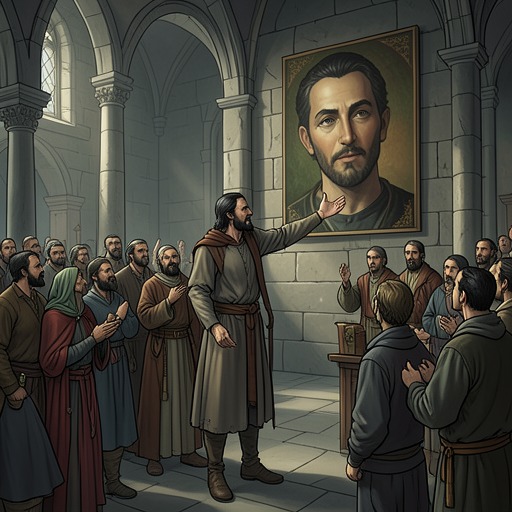
The reform arises at the end of the Nephite monarchy. King Mosiah II sends messengers throughout the land to learn the people’s will concerning the identity of their next king. The consultation initially produces a clear dynastic preference: the people want Aaron son of Mosiah to become their ruler. Their response shows that hereditary monarchy remains familiar and politically attractive, even after the failures associated with earlier kings.
The expected succession cannot occur because Aaron son of Mosiah declines the kingdom. Mosiah II explains that the person to whom the kingdom properly belongs will not assume it, leaving the people to confront a constitutional problem rather than simply acclaiming a replacement. The crisis is therefore both practical and philosophical. A system built around descent requires a willing and acceptable heir, but the refusal of that heir exposes the danger of treating inherited authority as the foundation of political order.
Mosiah II argues that kingship is unsafe because all people are not just. The objection is not merely that a particular ruler might be incompetent; it is that concentrated power magnifies the moral failures of whoever possesses it. Under kingship, the character of one person can determine the condition of an entire people, and the people may be compelled to suffer for decisions they did not make. The proposed law responds by making government more answerable to the community and by removing the assumption that royal succession is automatically beneficial.
Election, Law, and Popular Responsibility
The Law of Mosiah directs the people to choose judges through the voice of the people. These judges are not presented as free to invent whatever rules they prefer. They are to judge according to the laws handed down by the fathers, laws described as correct and given to those fathers by the hand of the Lord. The new political order thus combines popular selection with continuity, inherited legal standards, and sacred authority.
This arrangement creates a distinction between the source of office and the standard of judgment. The people choose the judges, but the judges are measured against laws that stand above personal preference. The system is neither simple majoritarianism nor unchecked judicial power. Its legitimacy depends on a continuing relationship among the public voice, established law, and divine command. Political participation is meaningful because it selects rulers; it is limited because rulers remain bound by a prior normative order.
The law also acknowledges an important weakness in popular government. It teaches that the voice of the people does not commonly desire what is wrong, yet the lesser part of the people may desire unrighteousness. This distinction makes collective rule dependent on the majority’s capacity to resist corrupt minorities, factions, and pressure groups. The people are not guaranteed wisdom merely because they deliberate together. Their political responsibility includes recognizing when a smaller, more determined portion seeks to bend the whole community toward injustice.
Mosiah II commands the people to act in the fear of the Lord and specifically commands that they have no king. The command gives the constitutional change a religious as well as civic force. The abolition of kingship is not portrayed as a temporary expedient forced by a vacant throne; it becomes a binding rule intended to prevent the recurrence of royal concentration. The people relinquish their desire for a king and become deeply concerned that every person should have an equal chance throughout the land. Equality here is expressed as equal political opportunity within a lawful community, not as an abstract promise detached from institutions.
Liberty and the Distribution of Consequences
At the heart of the Law of Mosiah is Mosiah II’s desire that inequality disappear, especially among his own people, and that the land become a land of liberty. This liberty is inseparable from institutional design. A king can transform personal error into national suffering because the kingdom permits the ruler’s will to dominate public life. Judges selected by the people disperse authority and make the community more visibly responsible for the government it receives.
The law’s logic of accountability is explicit. If the people commit sins and iniquities under the new order, responsibility is not transferred to a monarch; the people themselves bear the consequences. Under kingship, wrongdoing could be answered upon the heads of kings, but under the judges’ system the public cannot escape its share in political judgment. The reform therefore removes one form of inequality while imposing a demanding civic burden: freedom requires participation, discernment, and willingness to endure the results of collective choices.
The settlement also frames law as a safeguard against arbitrary power. Judges are to use the laws already given to the people rather than treat office as a license for personal rule. The arrangement seeks to prevent both royal domination and judicial improvisation. Its ideal government is accountable because officials are chosen by the people, restrained because they are bound by inherited law, and morally answerable because the entire system is placed under the fear of the Lord.
Threats from Unbelief, Faction, and Secret Rule
The broader narrative repeatedly demonstrates why the Law of Mosiah requires more than formal institutions. When people refuse belief, they cannot understand the word of God, and their hearts become hardened. That condition weakens the moral and interpretive foundation on which the law depends. A legal order may preserve procedures, but those procedures cannot by themselves produce the justice that the covenant community is expected to practice.
The law is also tested by priestcraft. Alma the Younger identifies the introduction of priestcraft among the people as a grave innovation and condemns an attempt to use religious standing for personal elevation. This episode shows that the Law of Mosiah must confront not only overt political tyranny but also the manipulation of sacred authority. A person may seek power by presenting ambition as religious office, turning belief into a means of status and control.
Later, secret combinations create a more direct assault on public government. Their members possess secret signs and secret words by which they recognize those who have entered their covenant. Such a network creates an unofficial legal and political order inside the public one: loyalty to hidden associates replaces accountability to the community, and private recognition becomes a mechanism for coordinated wrongdoing. When friends and kindreds of those who murdered the prophets seize influence, the regulations of government are destroyed and the land is pushed toward rule by a king. The collapse is not caused by a lawful constitutional decision; it is produced by clandestine solidarity that captures and dismantles public institutions.
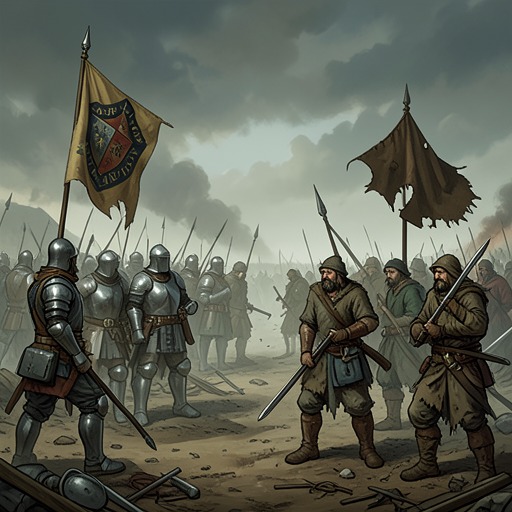
Military conflict likewise reveals the practical stakes of political legitimacy. Captured enemies cast down their weapons at the feet of the Nephites and plead for mercy, while Moroni takes them prisoner and takes possession of the city. The scene places law, conquest, surrender, and mercy in the same field of tension. The legal order must govern not only elections and domestic accusations but also the treatment of people whose political allegiance and military conduct have placed them outside the immediate safety of the community.
Discipline, Continuity, and Historical Significance
The Law of Mosiah survives as an ideal only when the community actively enforces moral standards. In the church, members are expected to observe strictly that there be no iniquity among them; those found committing iniquity can be condemned by three witnesses before the elders. This procedure shows a form of communal discipline with identifiable evidence and an institutional hearing. It is distinct from the general political voice, yet it echoes the same concern with public accountability, ordered judgment, and protection against arbitrary accusation.
The law’s principles are repeatedly recalled against later political disintegration. The Nephite record contrasts the ordered transition from kingship to judges with periods in which factions, secret combinations, and attempted royal restoration destroy governmental regulations. This contrast gives the Law of Mosiah a structural role in the larger history: it marks the high point of an effort to distribute power, while later crises demonstrate the vulnerability of that effort when public virtue and transparent institutions are replaced by conspiracy.
Its significance is therefore double. On one level, the Law of Mosiah establishes a constitutional alternative to hereditary rule: judges are chosen by the people, laws are inherited and treated as divinely grounded, and equal opportunity is preferred to royal privilege. On another level, it defines the moral conditions under which liberty can endure. The people must resist unrighteous minorities, reject priestcraft, refuse secret covenants that operate outside public law, and maintain disciplined communal standards. The law does not promise that institutions will eliminate sin. Instead, it distributes power so that no single ruler can easily convert personal wickedness into national bondage, while reminding the people that a free government ultimately reflects the justice or corruption of those who sustain it.